A boat ride on a bright, balmy morning on the Chilika Lake takes me to the Berhampura village, in the Puri district in Odisha, an island on the largest brackish water lagoon in India. The boats - traditional wooden boats, fishing trawlers, ferry boats and motorboats - are a lifeline for the locals, mostly fishing communities.
After getting off a rickety jetty, I walk past homes that have survived many a cyclone, a school bustling with children and storehouses with freshly caught fish and prawns. Tiny makeshift shops sell daily household items - the ubiquitous Kurkure, potato chips in colorful packets, biscuits from popular brands and the culturally embedded Maggi. A toddler sits gnawing on a Parle-G biscuit beside his mother, who makes a living selling these wares when other wage employment opportunities dry up. The last mile delivery of such zero nutrient, trans fats laden junk food to the remotest parts of the country has been ably solved for by the FMCG corporations, but the management chops to reach basic healthcare to the same places still remains unrealizable and hopelessly elusive.
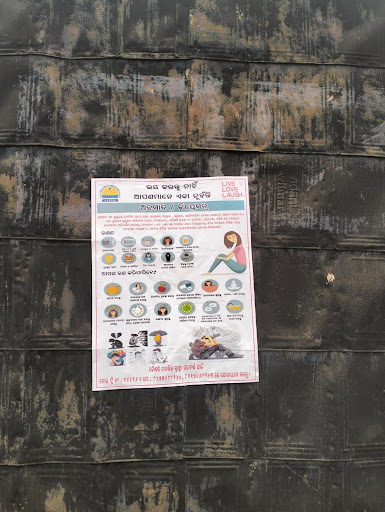
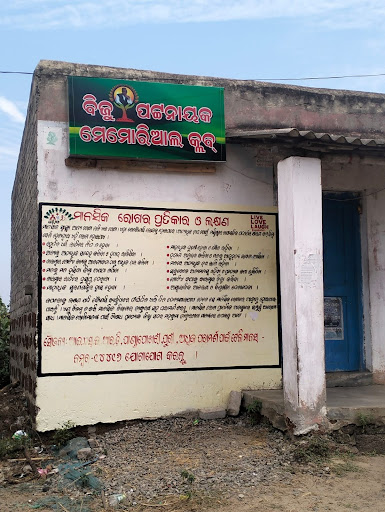
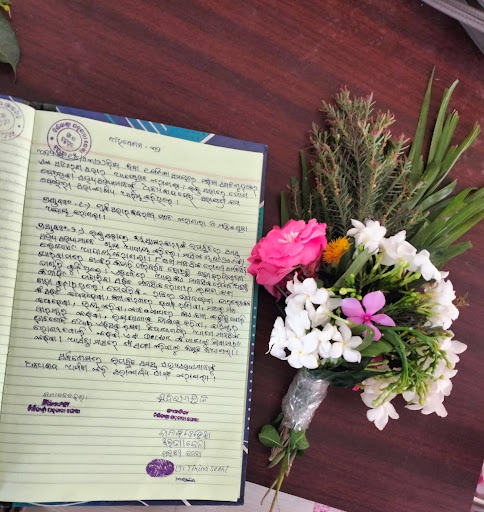
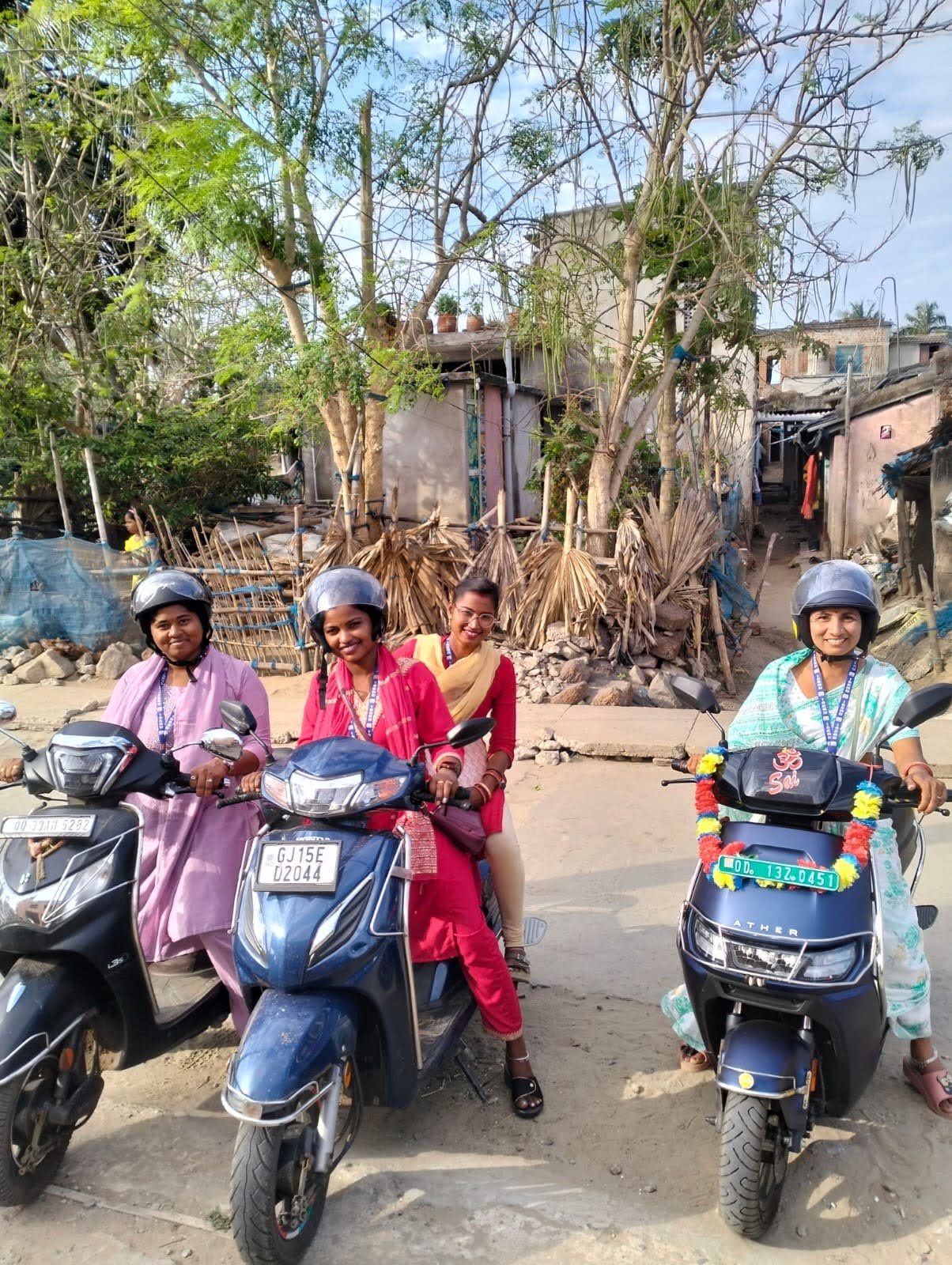
I make my way to the local Panchayat Office to meet the Chilikasri Jatnakari Support Group, an all-women support group composed of the caregivers of the individuals diagnosed with mental illnesses, the ASHA and Anganwadi members. The brightly clad women greet me with the Ulu Dhwani (which I thought was unique to Bengal) and bougainvillaea flowers from the garden outside.
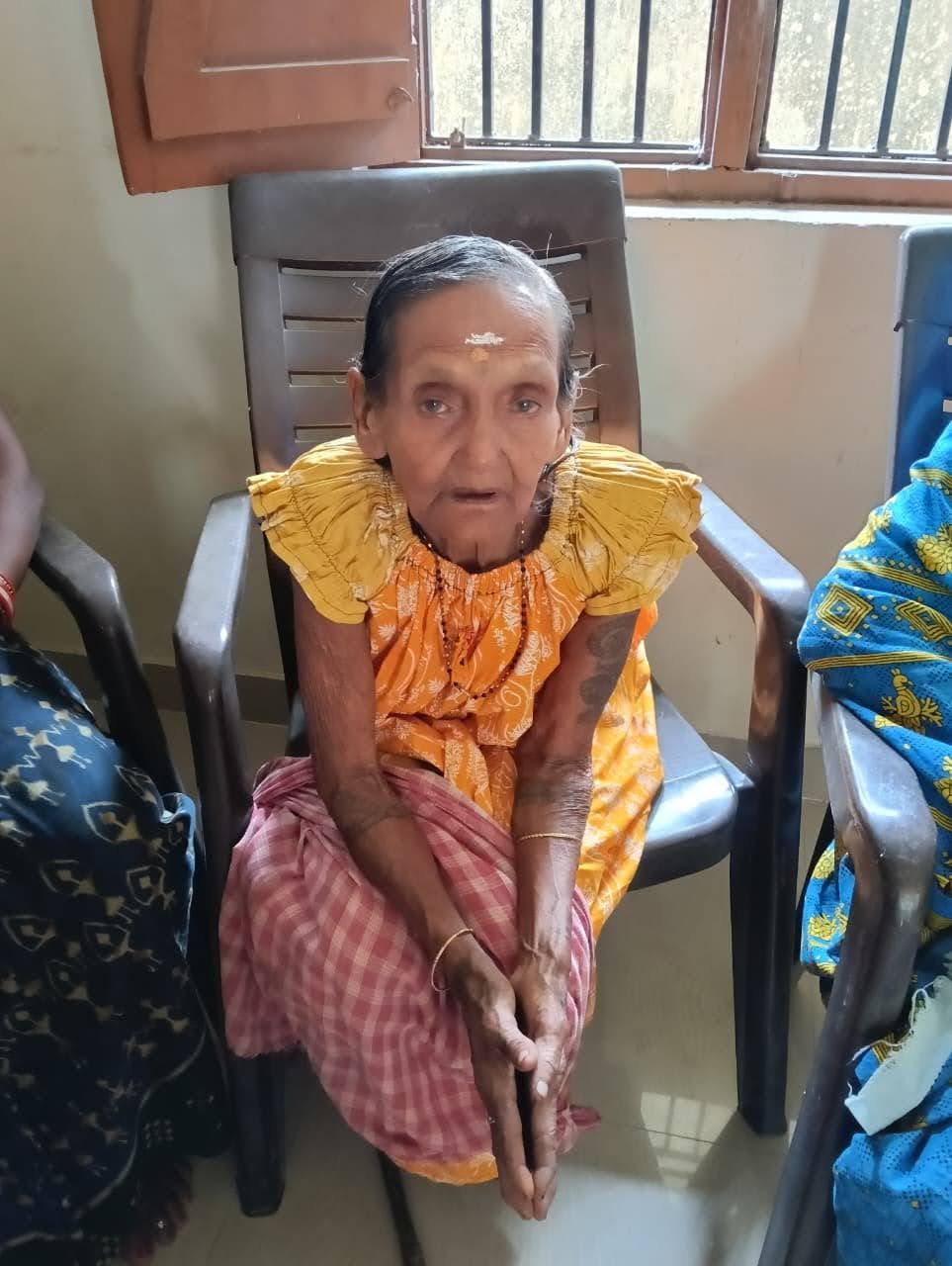
A petite old lady, perhaps well into her 90s, catches my attention. She is bent with age. Her frail frame folds into a brown plastic chair. She gives me a toothless smile that lights up her lined face.
After the meet and greet, the Block Supervisor and Counsellor from our on-ground partner’s team kick off the discussion. The village level support group, modelled on Self Help Group (SHG) principles, was formed to build awareness around mental health, address the deeply rooted stigma around mental illnesses, identify people with visible symptoms and nudge them to get diagnosed. The group comprises 10 members, including two ASHAs and Aaganwadi Teachers.
The field workers from our partner ISERD (Institute for Self Employment and Rural Development), a NGO established in the early 90s, work with the ASHAs, Aanganwadi Teachers, Panchayat leaders, village volunteers and use local intel to identify potential People With Mental Illnesses (PWMIs). Half way into the animated discussion with the women, the nonagenarian calls out and tells the group that she needs to speak to me. I pull up my chair next to her and ask her name. “I am Kamala Behara. I woke up at 3 am this morning, cooked for my daughter, cleaned the house and came to this meeting. I am sleepy and need to go home”. She went on to describe her daughter’s condition. When her - now 52 year old daughter - started showing signs of mental illness and started wandering across the village, her family disowned her. “I lost my husband many years ago. My sons asked me to leave if I chose to take care of my daughter. She was beautiful. I wanted to get her married but something happened and she started showing signs of being a “paagal”. I was broken but I was not going to give up on my daughter”.
The ASHA worker describes how she helped in identifying more than 5 or 6 such cases in the village which has an approximate population of 2300 individuals and less than 400 households (as per the 2011 census). There are 32 individuals who are provided with treatment support via the Government’s District Mental Health Program (DMHP), 4 families have received seed money to set up home-based livelihood opportunities and 12 individuals have been provided with the Unique Disability Identity (UDID) pension, all facilitated by the ISERD team.
Given the nature of the illness, the immediate caregivers play a critical role by providing consent to get their family member diagnosed by the psychiatrists from the DMHP. For the rural communities in these areas, the District Hospital is the main centre for accessing mental health treatment. A boat ride across the Chilika, followed by a shared auto or bus ride is the usual commute to the District Hospital in Puri located 50 kilometres away. However, with the advocacy efforts by the ISERD team, the health camps for diagnosis and follow-up treatment are now available at the nearest PHC in Satapada across the lake.
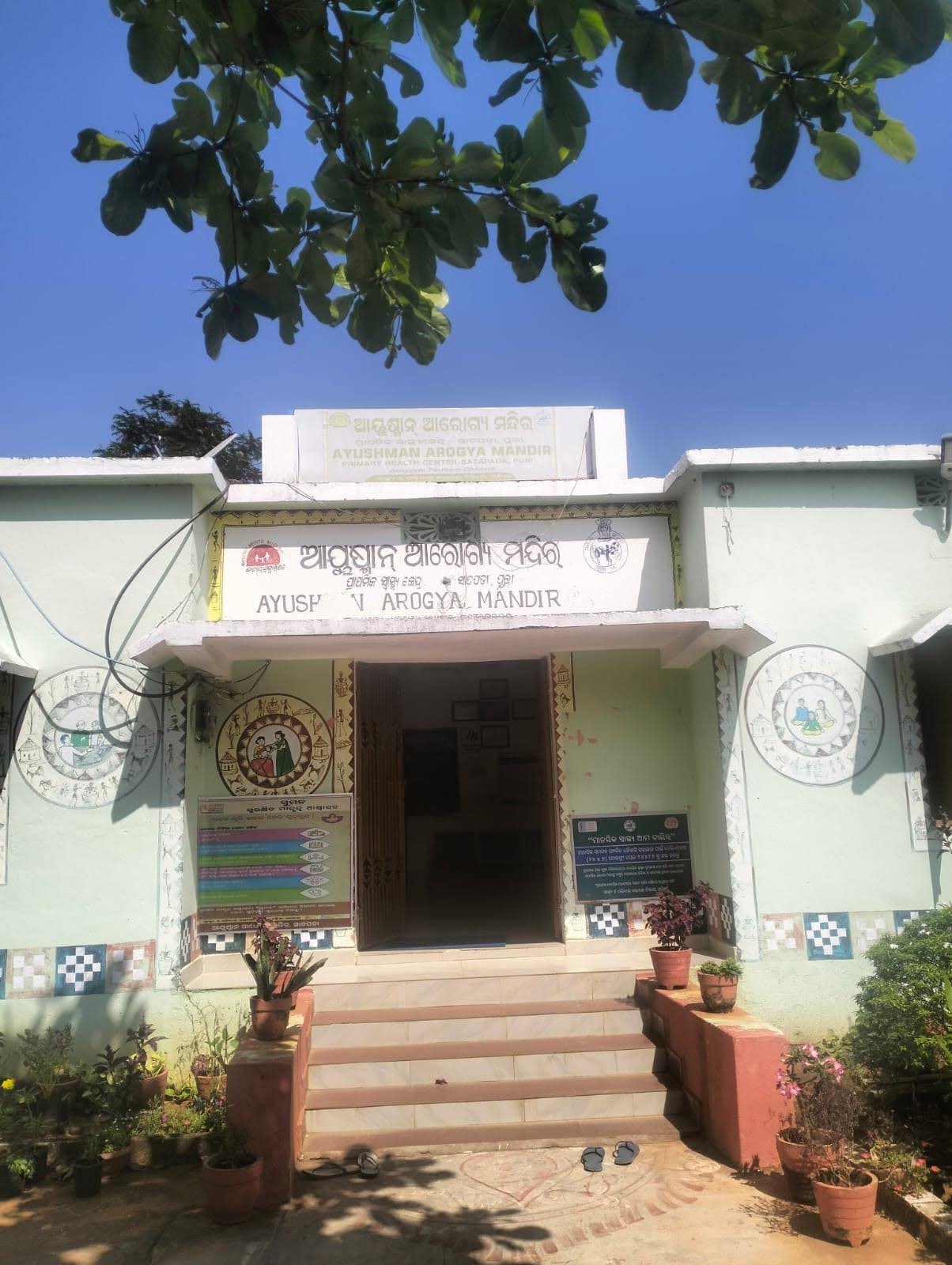
Access to some of the follow-up medication has been eased by provision at the PHC, thereby reducing the commute time significantly and out-of-pocket expenditure to some extent. However, the frequency of the mental health camps are not adequate and availability of critical medications is irregular.
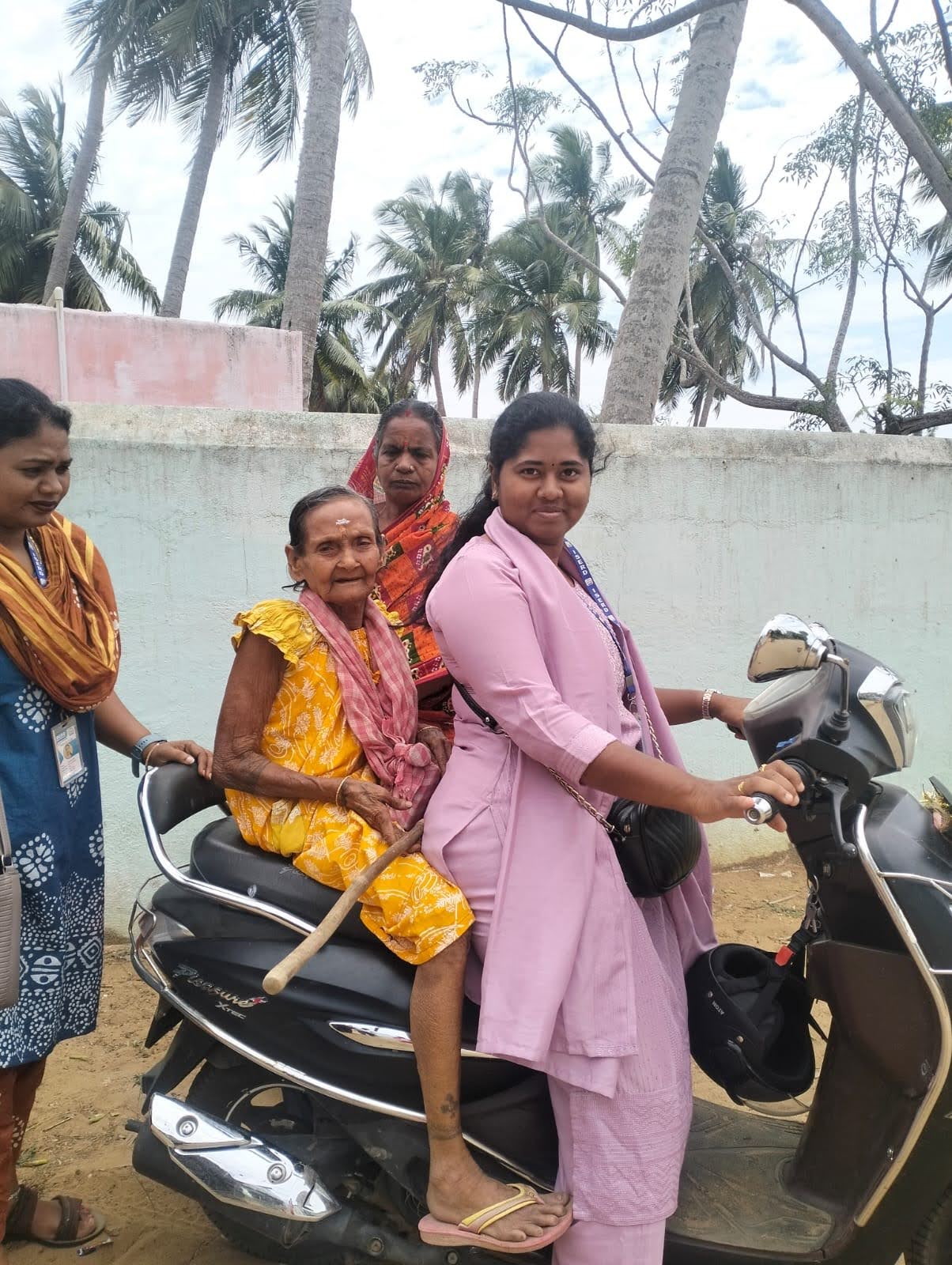
After we wrap up the meeting, the President of the support group offers to take me to Kamala Behara’s home. I hitch a ride with the Block Supervisor from the ISERD team on her scooter.
Kamala Behara is helped by the two young, sprightly Community Workers to ride pillion with Ankita Samal, the Counsellor.
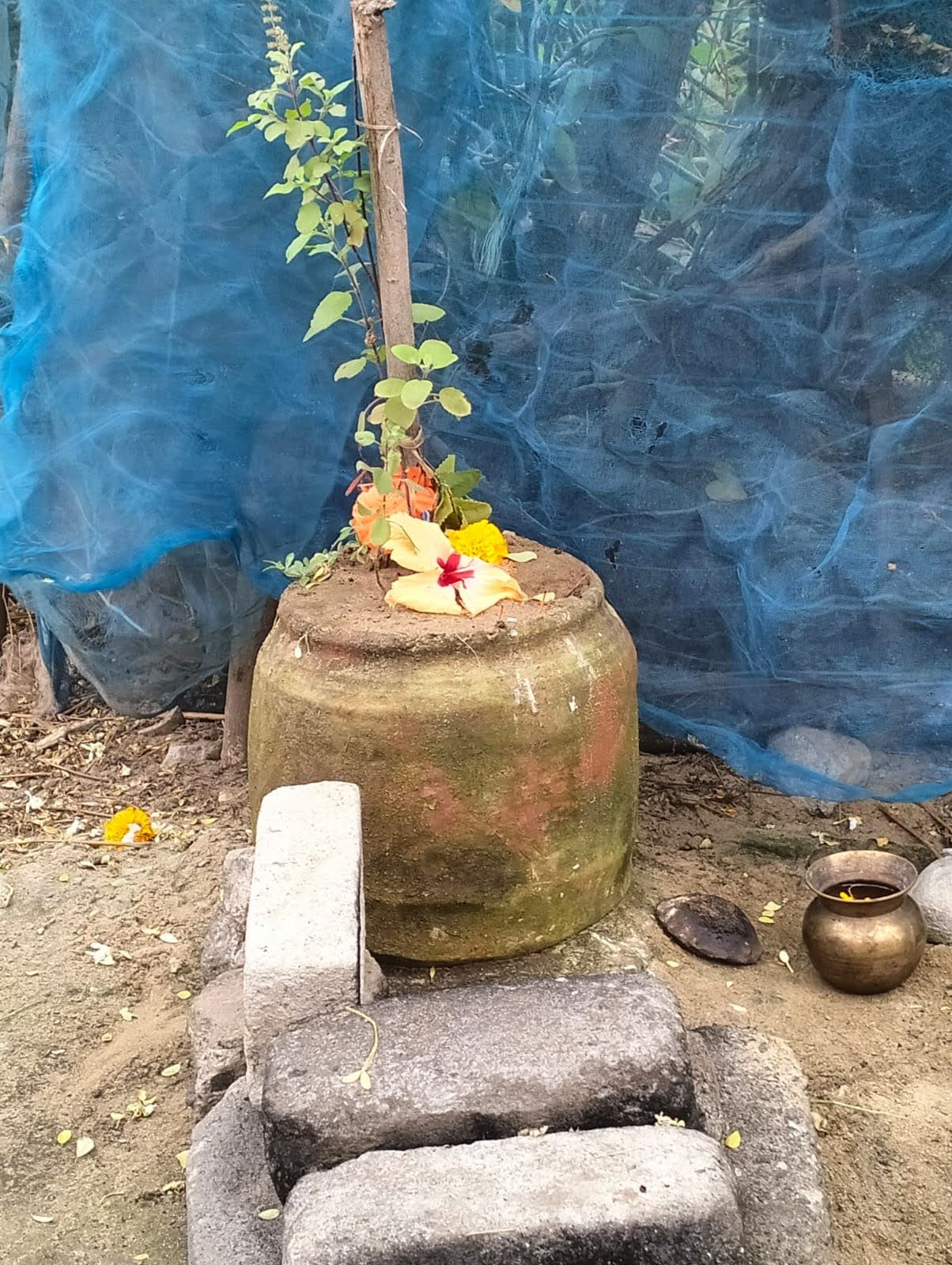
We ride through the mud roads and reach a rickety wooden gate that leads us to a house that has bare brick walls but no roof. A tulsi plant near the entrance doubles up as a mini shrine of worship for the two women household.
People clutch on to straws to keep the faith. I am introduced to Kamala’s daughter, Renu Behara, who was diagnosed with schizophrenia. She barely speaks but makes eye contact with me. I managed to communicate with her with translation support from the ISERD team. She extends her hands to hold mine in an unspoken sign of trust. It is heartening to see that the treatment regimen has helped reduce her erratic symptoms. “Who will care for her after I pass away?”, asks Kamala. There is awkward silence. No one attempts to answer that question.
I spent time meeting some more People With Mental Illness (PWMI) and their caregivers. Stories of families having sold their lands and gold to pay for black magic, temple rituals and soothsayers to supposedly cure mental illnesses is a common, recurring theme across all the program intervention areas that our Community Mental Health Program (CMHP) has reached, across 6 states. When a caregiver experiences relief via reduced “caregiver burden” the switch flips and they begin to see the benefit of seeking regular medical treatment.
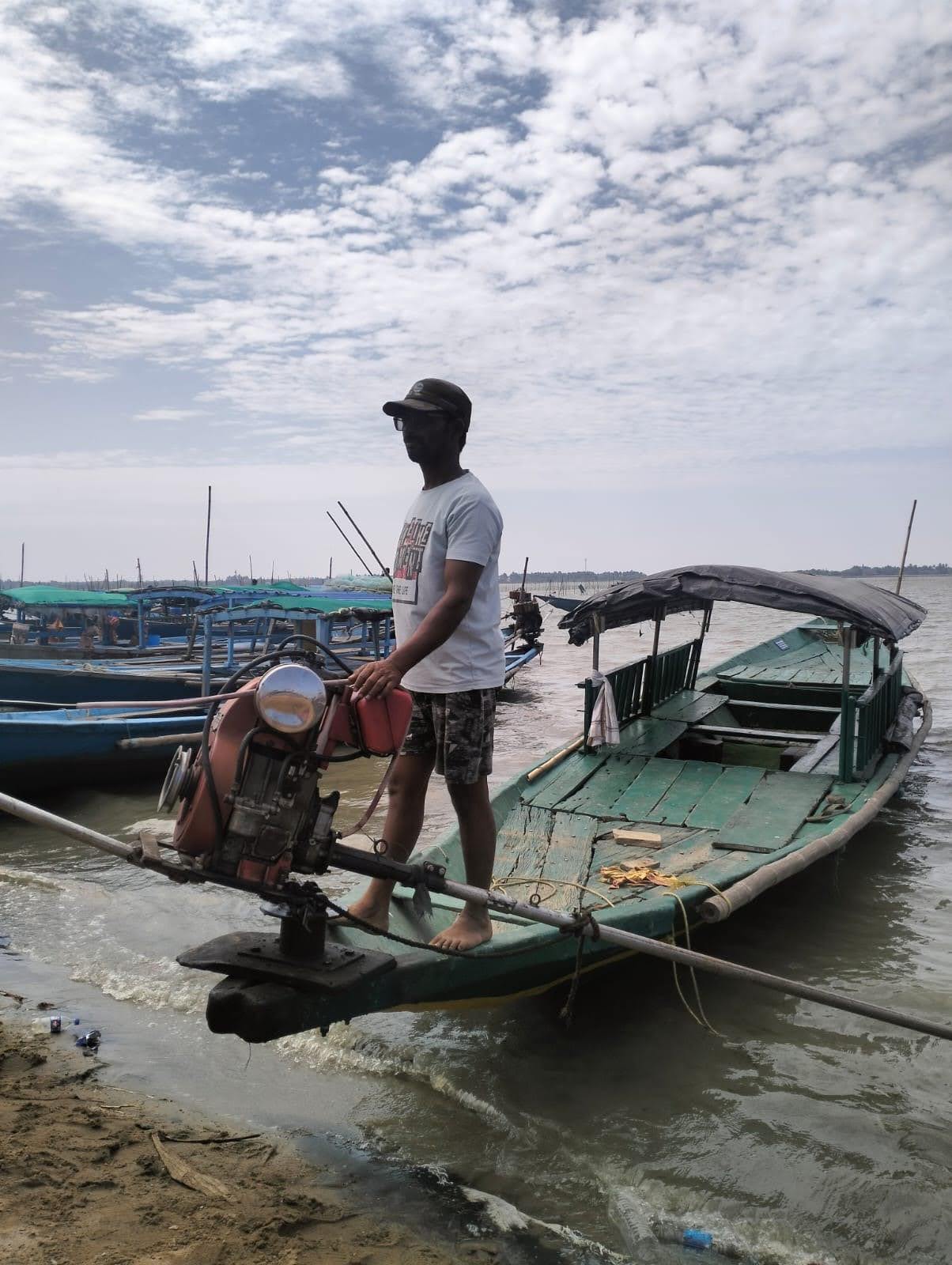
We head back to Satapada, the embarkation point to get to the mainland. The boatman, Raju, who ferries the PWMIs and the caregivers has become an unofficial advocate for destigmatizing mental health and keeps an eye for those showing mental health distress symptoms.
Estimates suggest that nearly 15% of the Indian population grapples with some form of mental health issue including anxiety disorders, depression, bipolar disorder, schizophrenia, substance use disorders, and neurodevelopmental disorders. The health infrastructure is poorly equipped to deal with the emerging size of mental health as a public health problem. Despite the complex challenges that the rural communities are up against - sub-optimal staffing in the DMHP, irregular availability of medicines, deep rooted stigma, difficult terrains and limited access to treatment centres - there is something that works. It is perhaps the social cohesion that acts as the unseen glue for the communities to come together and solve for access to treatment services. That's more than just a ray of hope. And hope is a good thing.